
Overview
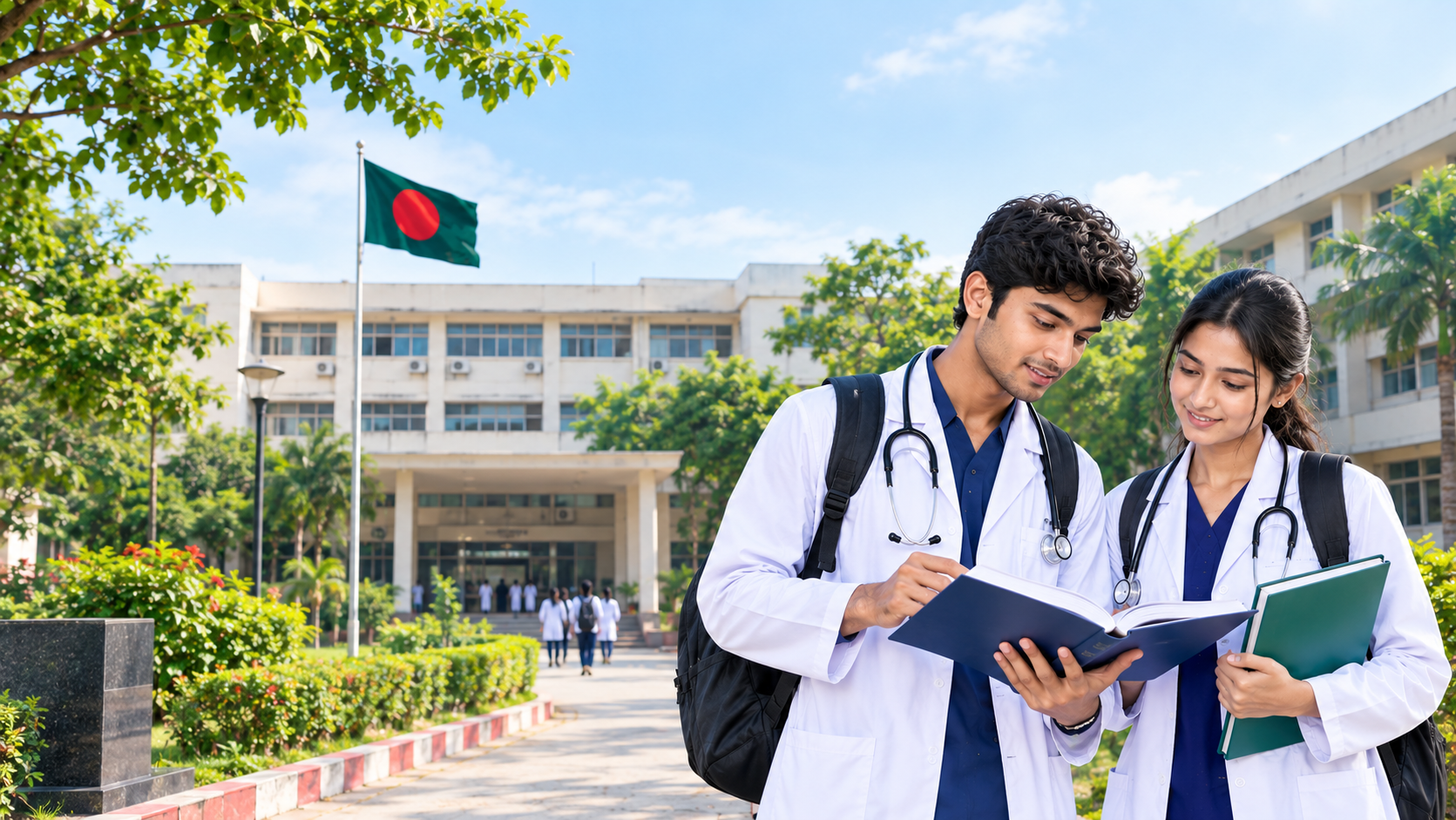
MBBS in Bangladesh is an excellent option for students seeking a successful medical career. Over the years, Bangladesh has emerged as a popular destination for Indian students due to its affordable fee structure and high-quality medical education. Most medical colleges offer MBBS programs in English and reserve nearly 30%–40% of their seats for international students, including those from India. Additionally, medical universities in Bangladesh are recognized by the World Health Organization (WHO) and the National Medical Commission (NMC), ensuring global acceptance of the degree.
The cost of pursuing MBBS in Bangladesh is significantly lower compared to private medical colleges in India and many Western countries. Indian students can complete their medical education at an estimated cost of around INR 25 lakhs, whereas private medical colleges in India may charge close to INR 1 crore. As of 2024, over 9,000 Indian students were enrolled in medical colleges across Bangladesh.
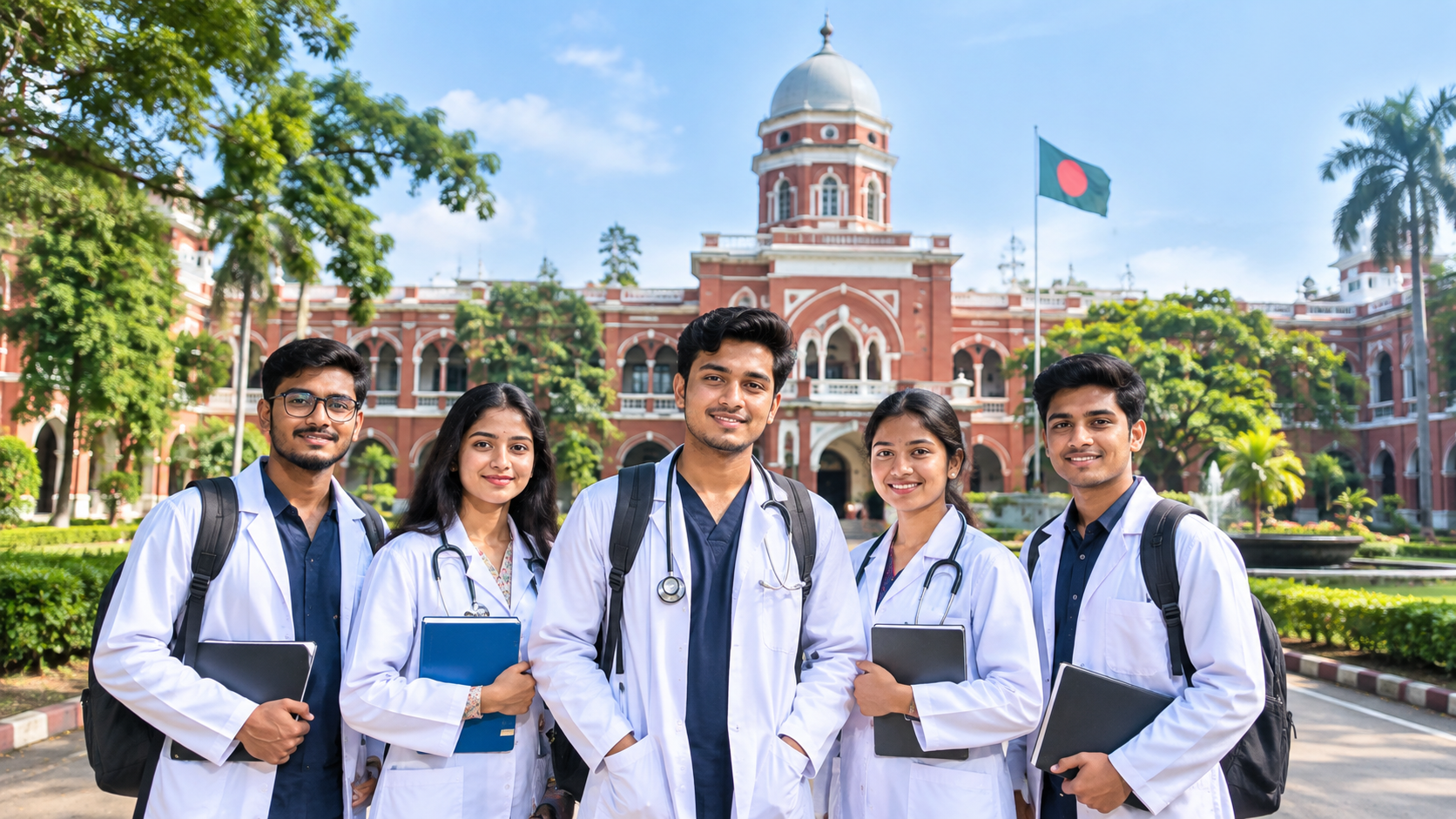
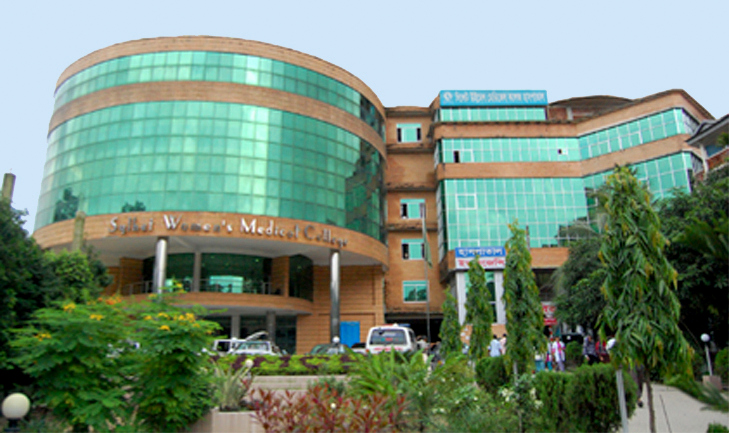
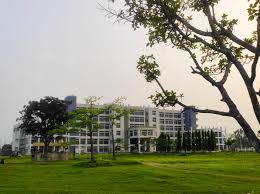
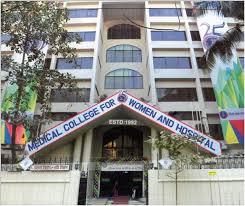
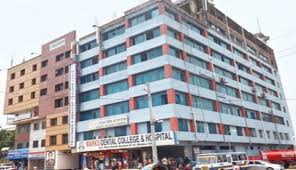
Bangladesh, a South Asian nation, offers modern infrastructure, experienced faculty, and effective teaching methodologies. Students pursuing MBBS in Bangladesh benefit from well-equipped classrooms, extensive libraries, and affiliated teaching hospitals that provide valuable hands-on clinical training experience.
₹5,80,000
NEET Qualified
High number of Indian students enrolled
High
English
5 + 1 Years
Why Study MBBS in Bangladesh for Indian Students
MBBS in Bangladesh has become a preferred choice for both domestic and international students due to the wide range of academic and career advantages it offers. Affordable tuition fees, advanced infrastructure, and globally recognized medical degrees make Bangladesh a highly selective destination for medical education. Medical colleges in Bangladesh are approved by the World Health Organization (WHO) and the National Medical Commission (NMC), ensuring quality education and worldwide career prospects.

High-Quality Education: Bangladesh is home to several reputed medical colleges known for delivering excellent academic standards and comprehensive clinical training. With modern medical facilities and international exposure, the country has emerged as one of the top destinations for pursuing an MBBS degree.
Globally Recognized Degree: Medical universities in Bangladesh are recognized by leading medical authorities such as the National Medical Commission (NMC), the World Health Organization (WHO), and other international medical councils, allowing graduates to pursue careers globally.
Affordable Tuition Fees: The cost of studying MBBS in Bangladesh is considerably lower than that of private medical colleges in India and most Western countries. This cost-effective fee structure makes it an ideal option for students seeking quality education without heavy financial pressure.
Favorable Currency Exchange: The depreciation of the local currency further reduces the overall cost of living and education, enabling students to pursue MBBS in Bangladesh economically while enjoying the country’s rich culture, cuisine, and natural beauty.
English-Medium Instruction: Most top medical colleges in Bangladesh offer MBBS programs in English, making it convenient for international students to adapt to the academic environment without the need to learn a new language.
Extensive Clinical Exposure: MBBS programs in Bangladesh emphasize practical learning and hands-on clinical training. Many medical universities are affiliated with leading hospitals, providing students with ample opportunities to gain real-world medical experience.
Cultural Similarity: Bangladesh shares cultural similarities with India and other South Asian nations, making it easier for Indian students to adjust and feel at home during their medical studies.
Global Practice Opportunities: Since MBBS degrees from Bangladesh are recognized by NMC, WHO, and other prominent medical bodies, graduates are eligible to practice medicine in various countries across the world after fulfilling respective licensing requirements.
Bangladesh at Glance
Bangladesh emerged as an independent nation after separating from Pakistan in 1971, following the Bangladesh Liberation War in which India played a significant role. Formerly known as East Pakistan, Bangladesh is a South Asian country sharing international borders with India, Myanmar (Burma), and other neighboring nations. It is the eighth most populous country in the world, covering a land area of approximately 147,570 square kilometers. Since gaining independence, Bangladesh has maintained strong diplomatic relations with India, and both countries continue to cooperate across various political, economic, and cultural sectors.
The country is widely recognized for its rich natural environment, particularly its rivers and vegetation. The Ganges, Brahmaputra, and Meghna rivers converge to form the Bengal Delta, the largest delta in the world. Bangladesh also shares the Sundarbans mangrove forest with India along its southern coastline, which is famously home to the Royal Bengal Tiger.
Geographically, Bangladesh is divided into three main regions. The Ganges–Brahmaputra Delta dominates much of the country, while the Madhupur and Barind plateaus are located in the central and northwestern areas. The northeastern and southeastern parts of the country are characterized by evergreen hills. Bangladesh experiences a warm climate throughout the year, with temperatures rarely falling below 0°C. The monsoon season lasts from June to October and is marked by hot, humid weather and heavy rainfall.

- Entrance Exam – NEET-UG qualification is mandatory
- Academic Qualification – Students belonging to the General category must have a minimum aggregate score of 60%, while candidates from the SC/ST category are required to secure at least 50%. The minimum combined GPA in SSC and HSC examinations is determined by the Government of Bangladesh.
- Age – Minimum 17 Years
- Registration: This is the initial step in the MBBS admission process in Bangladesh. Medical universities in Bangladesh typically begin their admission intake in December, and there is no winter intake available. To initiate the admission process, students are required to complete prior registration by paying the prescribed registration fee.
- Documentation: In this step, candidates are required to upload soft copies of all relevant documents and provide the necessary information on the university’s admission portal for MBBS in Bangladesh. Applicants can refer to the official list of required documents for complete details.
- Apostille and Validation: This stage involves document verification. Candidates must submit all relevant academic documents, along with the NEET scorecard and other required certificates, in their original form for MBBS admission in Bangladesh. These documents are then forwarded to the concerned authorities in both India and Bangladesh for verification, validation, and notarization.
- Letter of Invitation: Once all documents are successfully verified and the required formalities are completed, the respective university issues the admission letter. This document confirms that the student has been officially enrolled in the medical degree program at the university.
- Visa Process: The visa process starts once the student receives the university’s Letter of Invitation (LOI). The application usually takes about 10–15 working days to complete, and the visa must be renewed annually.
- Departure: At this stage, our team will assist students with all necessary arrangements, including flight bookings, international SIM cards, foreign exchange support, airport pickup in Bangladesh, transfer to the university, and hostel allotment
Overview of MBBS Program Costs in Bangladesh
The cost of Medical Education in Bangladesh varies depending on the city and university which is chosen. Here's a table showing MBBS in Bangladesh for Indian students fees.
| Type of Expense Approx. | Cost (in USD) |
|---|---|
| Tuition fee per year | 6600 |
| Accommodation | 1300 |
| Mess | 1200 |
| Visa | 200 |
| Medical Insurance | 100 |
| Total Expense | 9400 |